3 Scientific theories and models
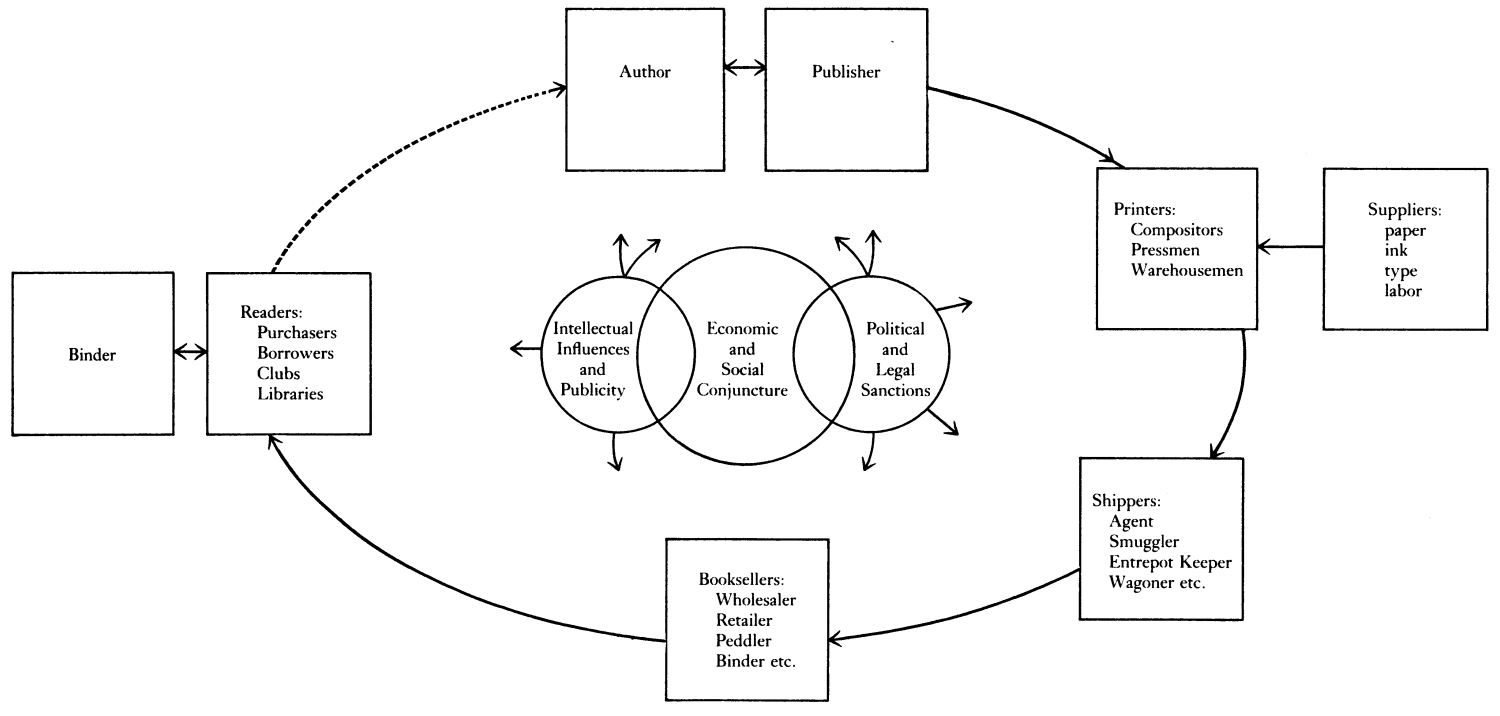
Robert Darnton published his “communication circuit” model in 1982,1 which—rightly so—is regularly cited in the scholarship. Darnton points out that it is not enough to examine individual subfields. A book’s journey begins with its writing and continues through publication, printing, transportation, and distribution, all the way to reading; various actors participate in each of these phases, while political, legal, economic, social, and intellectual influences accompany the entire journey. Finally, since readers’ feedback and expectations also influence the work, the journey takes us back from the reader to the writer.
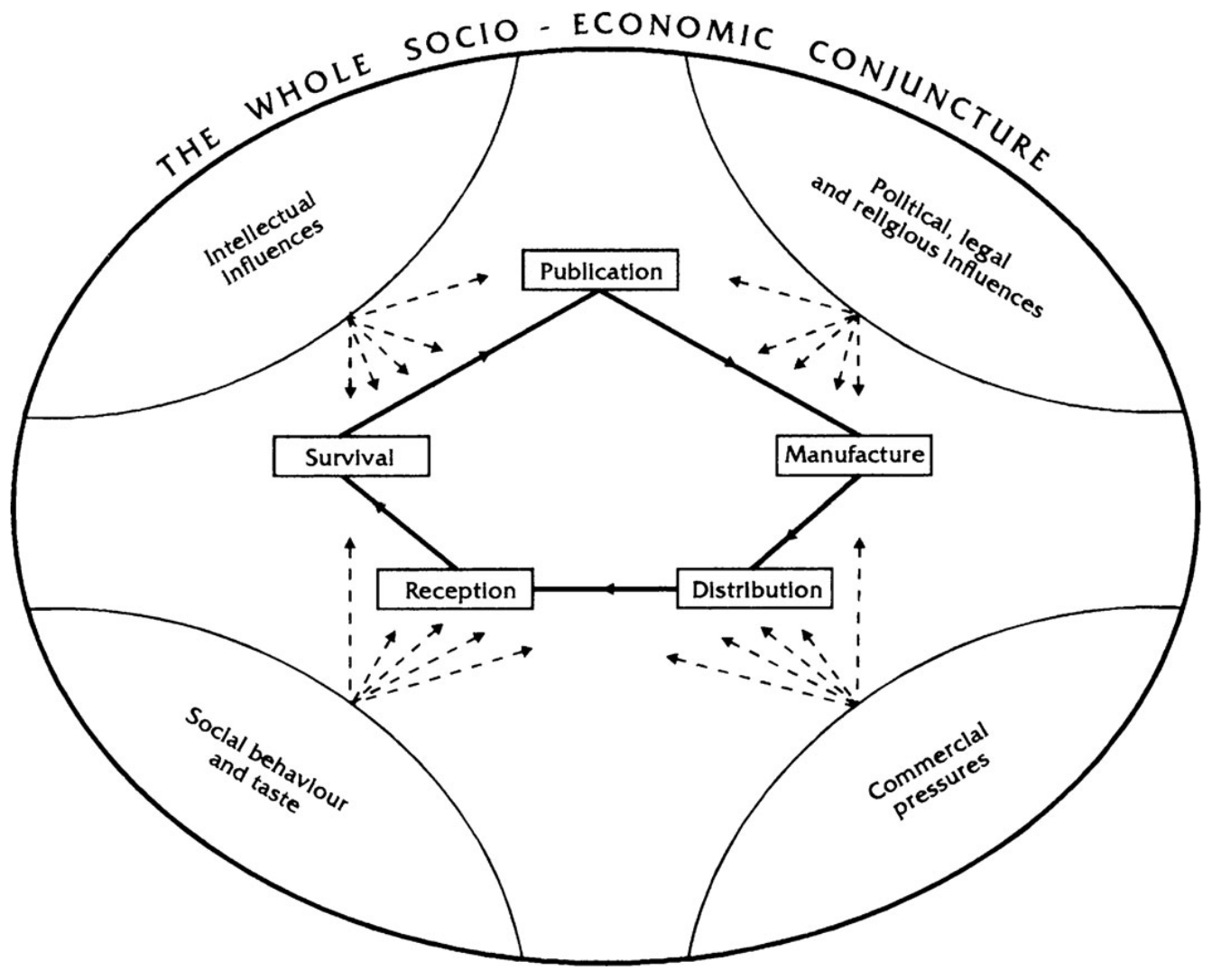
Darnton’s model received widespread attention; of these responses, he himself considered Adams and Baker’s 1993 article, A New Model for the Study of the Book to be the most noteworthy.2 The British authors focused on the life cycle of publications, whose stages are publication, book production (manufacturing), distribution, reception, and survival. The significance of external influences varies throughout the life cycle. At first, political, legal, and religious influences dominate; then, in turn, market pressures, social behavior patterns, and taste; and finally, in the survival phase, intellectual influences.
As far as I know, Pierre Bourdieu also published in 1993 his only study specifically examining the situation and post-World War II history of fiction publishing in France3 (his research was continued after his death by his former student Giséle Sapiro, who focused on translations). Drawing on his own field theory framework, but also relying on extensive economic statistics and interviews, Bourdieu concluded that the publisher is the person who invests enormous effort in ensuring that the publication confers publicity—and the accompanying fame and recognition—upon the text and its author. This type of “creation” typically involves a kind of consecration, a transfer of symbolic capital (similar to what a foreword represents), which the publisher bestows not only on the author but also on the company—primarily on its “catalog,” that is, the repertoire of more or less recognized authors previously published by the publisher.
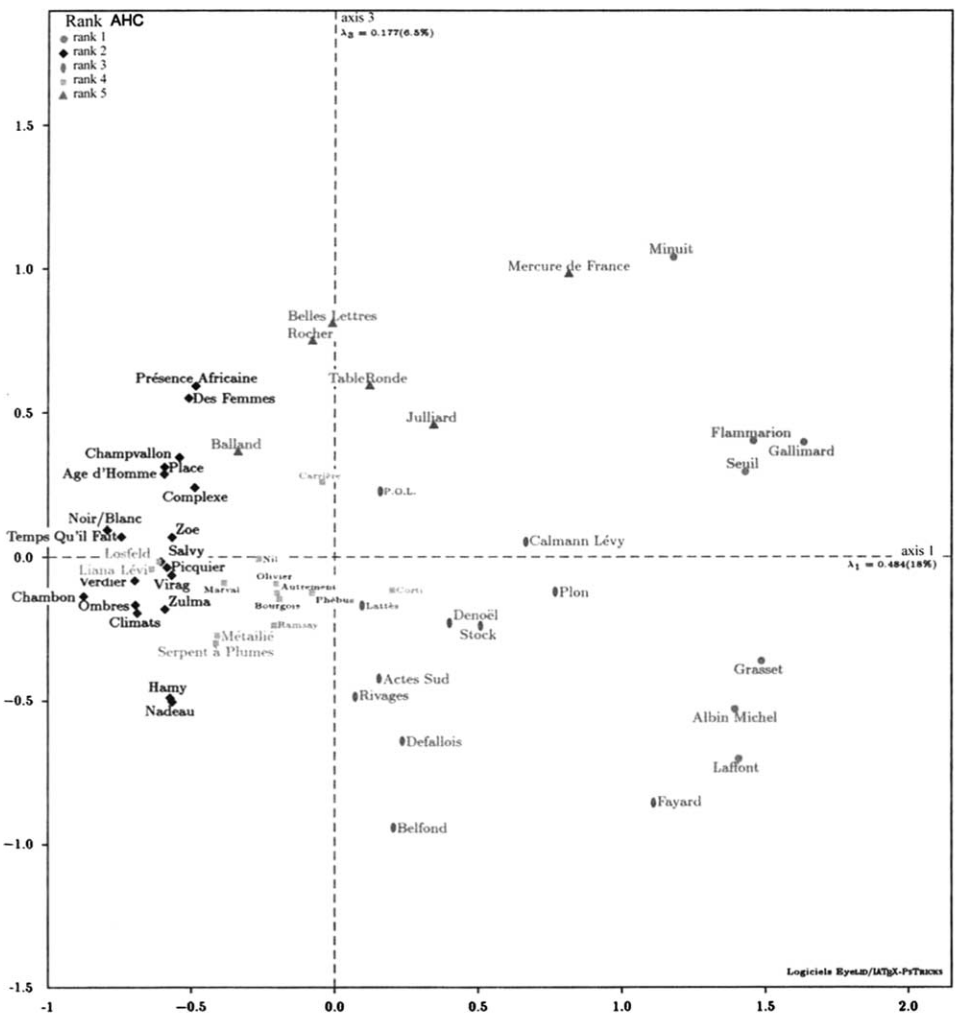
In other words, if an author is published by a certain publisher—especially in a series where the other authors have previously achieved great professional and/or reader success—this enhances the author’s standing. But can symbolic capital be described and measured? Are there measurable quantitative and qualitative differences between the symbolic capital of various publishers? Bourdieu’s team attempts to measure just that. They examined sixteen measurable criteria, which fall into five major groups: legal and financial status; financial or commercial dependence on other publishers; market weight; symbolic capital; the weight of foreign-language literature in the publisher’s profile (the proportion of translations in the publisher’s catalog). Symbolic capital can be measured by the following characteristics: the age of the publisher (how long it has been in operation), the geographic location of the publisher’s headquarters (the classic center of French publishing is the Left Bank of downtown Paris, in the 5th, 6th, and 7th arrondissements), editorial prestige (the accumulated symbolic capital), and major French and international literary awards (above all, the Nobel Prize). The accumulated symbolic capital is a measure of how important earlier authors are, which was assessed based on their presence in Joseph Jurt’s bibliography; Jurt examined how frequently 20th-century French authors appear in a corpus compiled from literary anthologies, dictionaries, and literary history handbooks. After coding and statistical analysis, the publishers were grouped based on three key cumulative criteria: degree of dependence, prestige, and the weight of translations. Based on this—and as reflected in the title—it was possible to identify a sort of publishing life cycle for major publishers: over time, an earlier bold, risk-taking strategy is replaced by a conservative one—one that prioritizes the financial interests of the owners and focuses on publications that promise market success rather than literary value. There are even extreme cases of this; for example, there is a publisher that gained a reputation 30 years ago precisely for its bold and discerning publication of contemporary world literature, but during the period under review, it ranked among those publishing the fewest translations. An analysis of the career paths of executives at major publishers reveals that the majority today come not from the broader world of literature, but from other areas of management. The most exciting and daring publishers tend to be small, rural, and women-led publishers, who often specialize in a particular genre or the literature of a specific language; thus, there are publishers with a Brazilian or, for example, a Hungarian focus (Ibolya Virag). However, these small publishers lack sufficient capital—both financial and symbolic—to successfully defend themselves should they come into conflict with a major publisher. For example, there is a writer who later won the Nobel Prize and who, after being rejected by every major Parisian publisher, was published by one of these small publishers—while he was still unknown. As soon as he began to gain recognition—but even before winning the Nobel Prize—he was picked up by a major publisher. The role of small publishers is, incidentally, supported by independent distributors, that is, small bookstores. Distribution is, in any case, an interesting and indispensable aspect to consider when examining publishers, since more than a few of the “big players” are in some way part of an economic group that includes one or more distribution networks, and there are even executives who came from this world and started out as bookstore clerks (which parallels the career of the Hungarian enterpreneur Dezső Matyi). The paper cites numerous similar stories to illustrate these processes. Incidentally, Bourdieu does not describe the world of book publishers with cold detachment at all; his own value judgments are palpable throughout the paper.
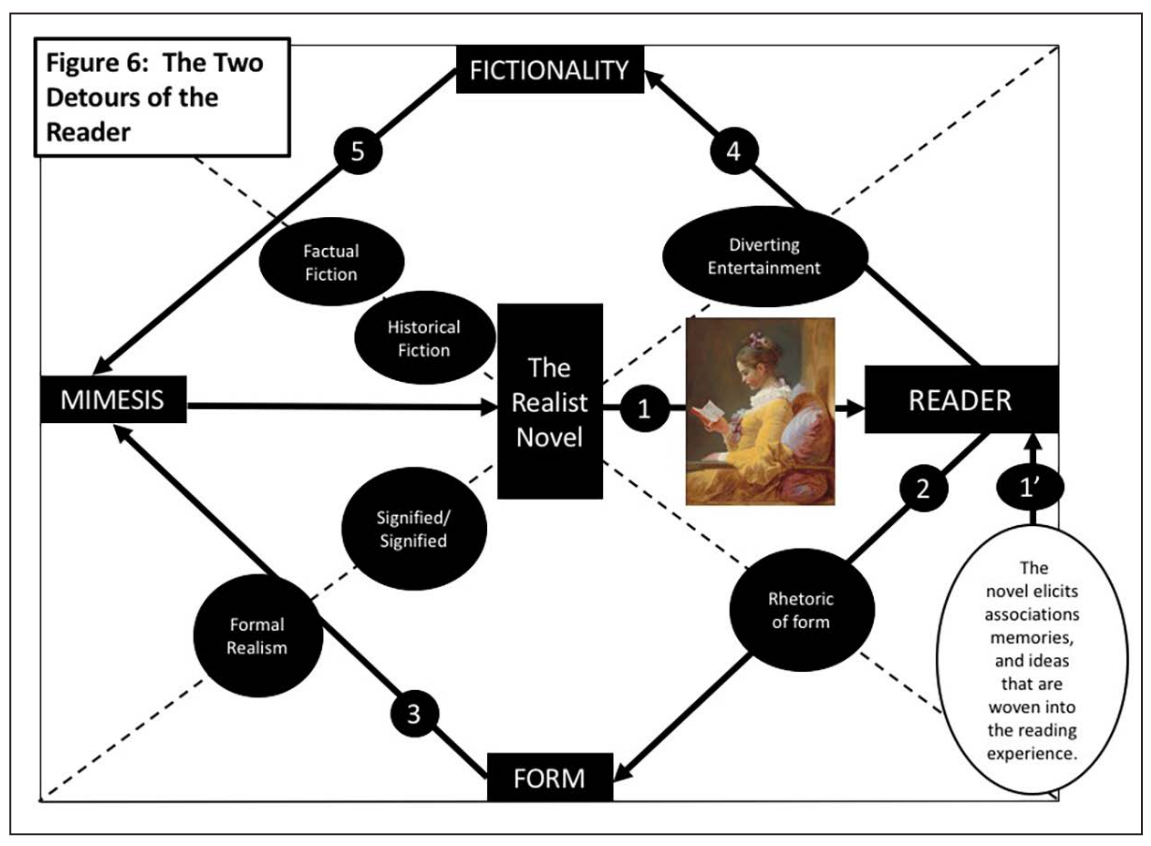
Bruno Latour, a French historian of science, analyzed the history of discoveries and their effects and, along with others, arrived at the seemingly trivial conclusion that these processes consist of small steps, which should be analyzed in terms of the actions of “actors” that influence one another and their direct effects. In this way, these actions form a complex and ever-changing network in which everyone participates in one way or another. The members of this network include not only people but also objects, ideas, and processes; therefore, one cannot speak of “external influences” or, consequently, of self-contained “social forces” that shape social phenomena. The model has been dubbed the “actor-network theory,” and although its impact on the history of the book is of lesser significance than that of previous theories, it has served well in the study of early modern English printing or the reading of the novel.4
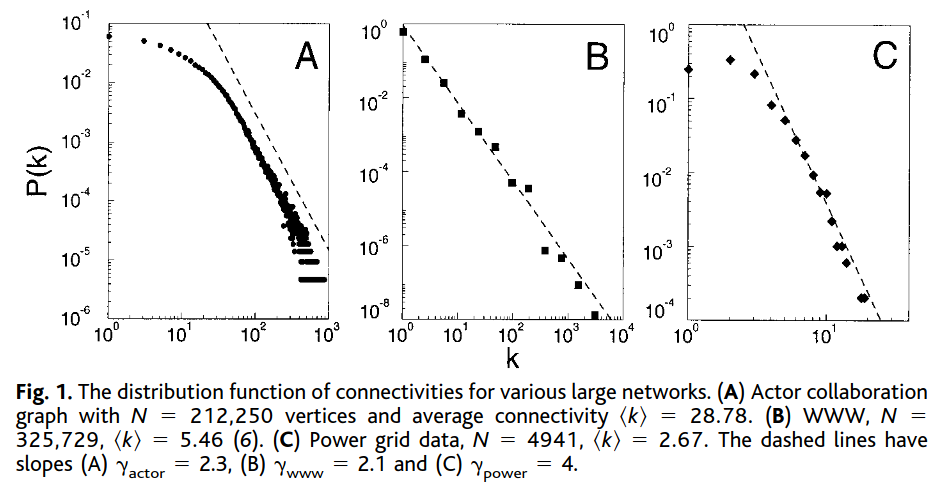
Albert Barabási and his colleagues, while studying networks, discovered that the mathematical properties of actual networks—composed of very different elements—are similar regardless of the network’s size.5 The detection and visualization of networks have also become standard methods in library history research over the past decade, although it should be noted that network analysis does not always extend to the calculation of the metrics proposed by the authors. It is particularly worth mentioning that Barabási’s group itself has engaged in scientometric analyses—which can be regarded as a frontier area of the history of the book (Barabási calls this the “science of science”)—and that the metrics of networks consisting of homogeneous nodes are not always suitable for describing the bipartite (bipartite) networks (where, for example, books and their subjects, translations, or contributors represent the nodes, and the subject serves as the link connecting two or more books).
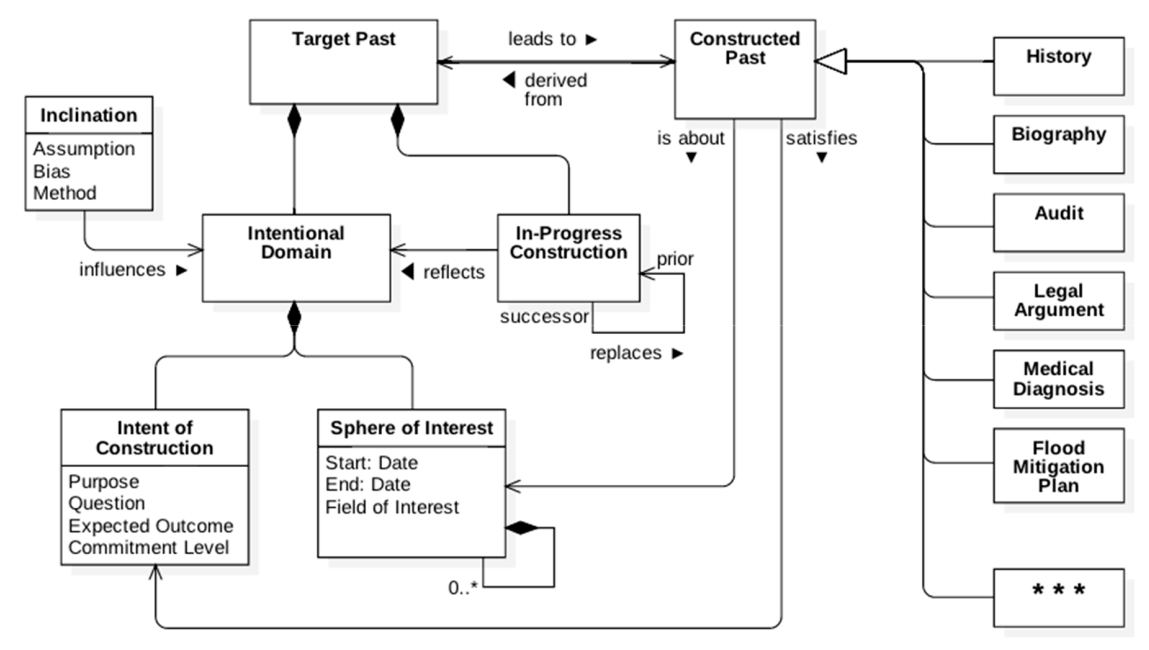
Kenneth Thibodeau, a staff member at NARA in the United States responsible for electronic records and a theorist of international renown in the field of electronic records management, worked on the theory of “archival engineering” after his retirement, which essentially is an abstract model—applicable to archival informatics—for archival records and historical understanding.6 According to Thibodeau (and in this he agrees with numerous philosophers of history), the past is always constructed; it is created by the researcher based on archival records and the various contexts and bodies of knowledge—both dependent on and independent of the records—that are available. Since the word “record” carries multiple layers of meaning in archival and historical scholarship, he uses the term “token” to refer to any object that serves as an imprint of a past event. Tokens are not fully interchangeable substitutes for other tokens. For example, a past event might be an oath, whose token is the document recording the text of the oath, whose token is a digital copy of the document, and so on.
Manfred Thaller, an Austrian historian and computer scientist—one of the first German-speaking digital humanities scholars and the developer of the Kleio software—developed a similar model of historical information essentially in parallel with Thibodeau, using a partially similar set of concepts, but independently of him.7 Three of his propositions are worth quoting:
History is the study of phenomena that require the analysis of information produced as a result of human endeavors, where the creators of that information cannot—or should not—be asked about the meaning of the information they have left behind.
Historical sources should not be interpreted as signs of a uniform message. They are tokens that the historian must interpret. The process of interpretation must be documented as precisely as possible, since any actual difference of opinion regarding the interpretation of a given token highlights the need to clarify understanding among the subjects.
Thaller rejects—or, more precisely, considers insufficient from the perspective of historical understanding—the conventional hierarchy of data–information–knowledge, arguing instead that information is context-dependent, and that context is primarily constituted by space and time. According to his proposal, the information that can be extracted at a given time is a function of past information and prior knowledge, and information is limited to a specific time frame.
In the course, depending on the time available, one could discuss numerous other theories that influence the history of libraries—most notably, for example, Jürgen Habermas’s research on the structure of the public sphere, counterfactual hypotheses, and theories of historiography or quantitative methodologies.